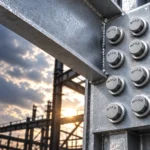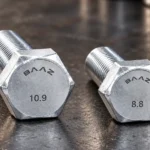

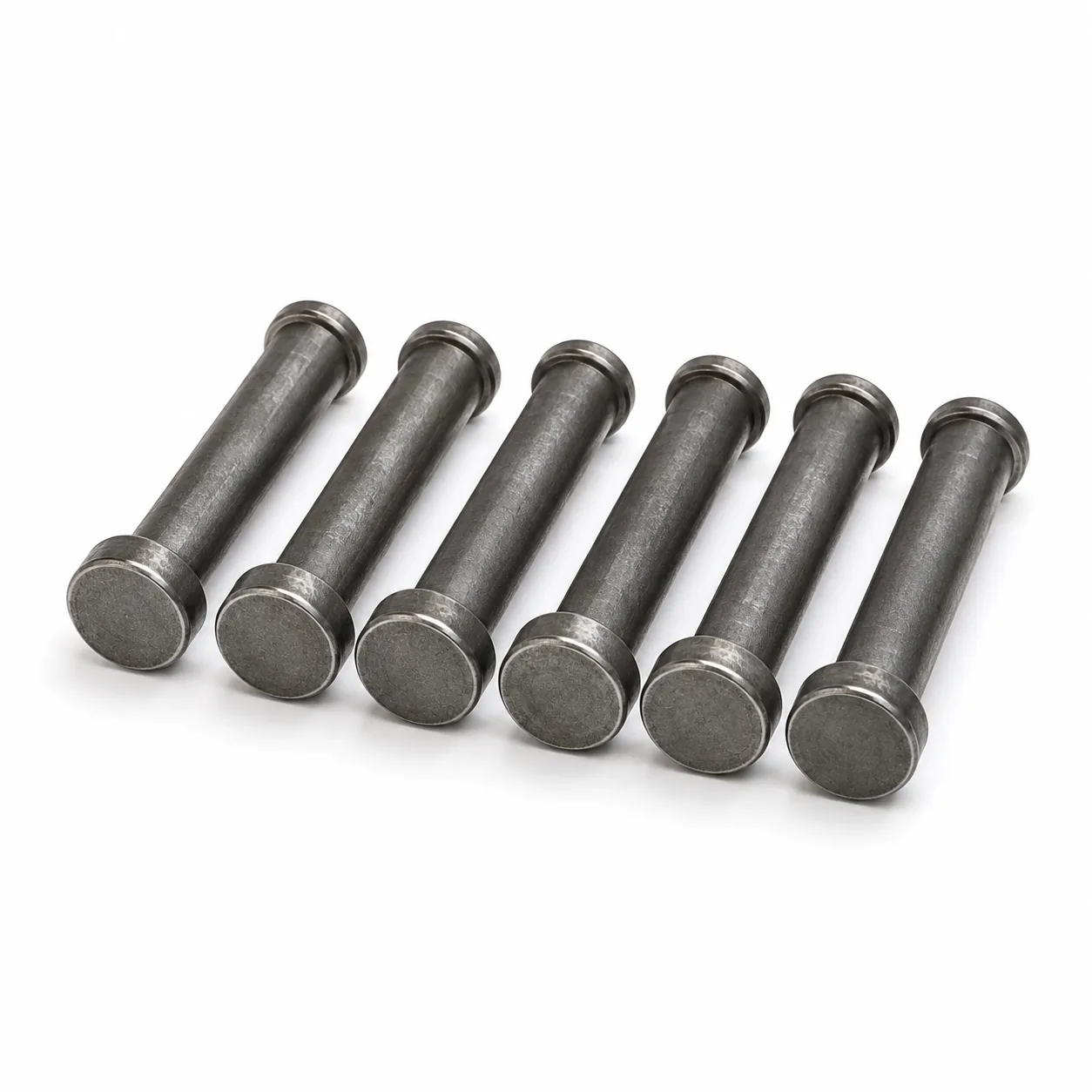
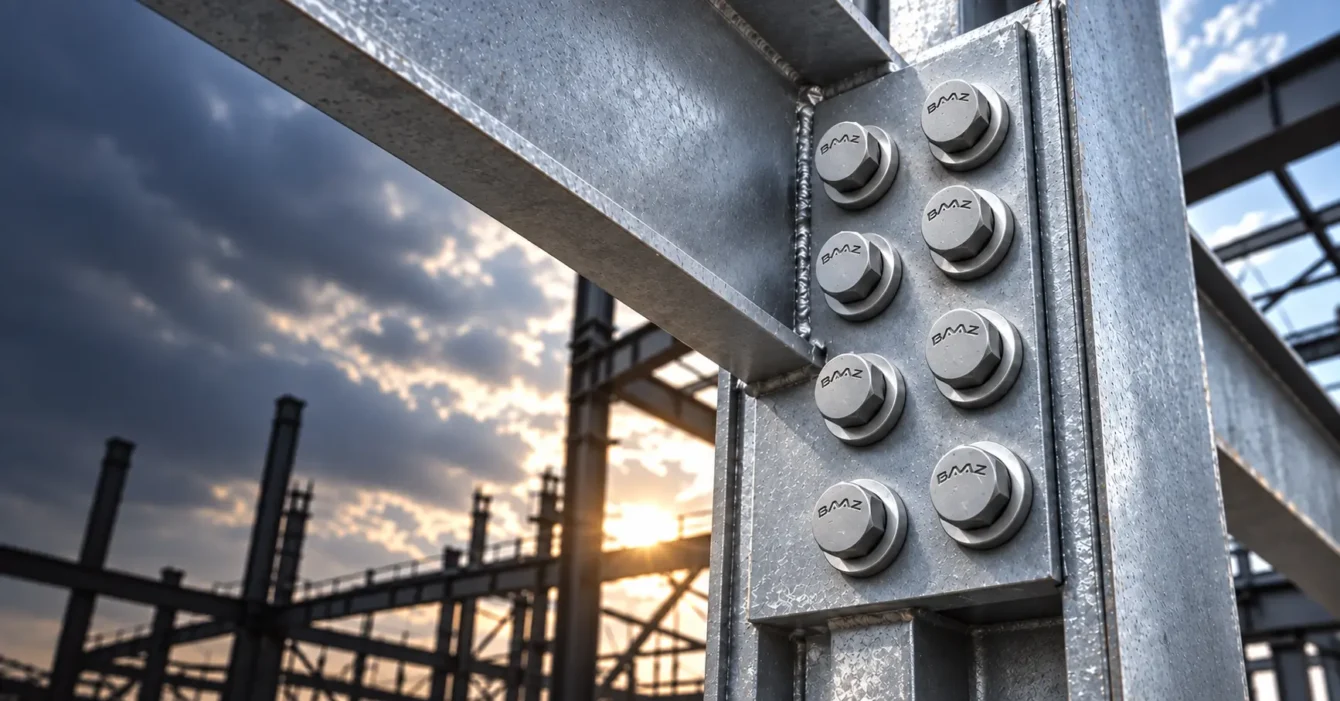
HSFG (High Strength Friction Grip) bolts and regular bolts transfer load differently. HSFG bolts are tightened to a controlled preload, creating clamping friction between joined steel plates so the connection resists slip under service load — making them ideal for bridges, high-rises, and other structures with dynamic or cyclic loading. Regular bolts rely on shear and bearing instead, with no controlled preload, and are tightened until snug. HSFG bolts offer better fatigue resistance and vibration resistance but cost more and generally aren’t reusable once tensioned. Common HSFG grades are 8.8 and 10.9, manufactured to IS 3757, EN 14399, or ASTM A325 standards.
In structural steel connections, the choice between a regular bolt and a High Strength Friction Grip (HSFG) bolt isn’t just a matter of size or grade — it changes how the entire joint behaves under load. As a HSFG Bolts Manufacturer, we get asked this question often by engineers, fabricators, and procurement teams sourcing fasteners for bridges, buildings, and heavy industrial structures. This guide breaks down exactly what separates the two, so you can specify the right bolt for the job with confidence.
What Is an HSFG Bolt?
An HSFG bolt is a high-tensile structural fastener tightened to a controlled preload, creating a clamping force between the steel plates it joins. That clamping force — not the bolt shank itself — is what actually resists the load. In a slip-critical connection, friction between the clamped surfaces carries the force, and the bolt is designed so the joint doesn’t slip under normal service loads.
What Is a Regular Bolt?
A regular (or “black”) bolt relies on a fundamentally different mechanism: bearing and shear. The bolt shank sits inside the hole, and when the joint is loaded, the bolt physically bears against the sides of the hole and resists the load in shear. There’s no engineered preload — the bolt is simply tightened until snug, not torqued to a specific tension.
HSFG Bolts vs. Regular Bolts — Side-by-Side Comparison
| Factor | HSFG Bolts | Regular Bolts |
|---|---|---|
| Load transfer mechanism | Friction (clamping force between plates) | Shear and bearing (bolt shank against hole) |
| Tightening method | Torqued to a specific preload/tension | Tightened until snug, no controlled preload |
| Joint slip | Designed to be slip-critical — no movement under service load | Some slip typically occurs due to clearance between bolt and hole |
| Fatigue performance | Strong — preload reduces stress range under cyclic loading | Weaker — full stress range acts on the bolt each cycle |
| Vibration resistance | High — clamping force resists loosening | Lower — more prone to loosening over time |
| Reusability | Generally not reused once tensioned | Can typically be reused |
| Common grades | 8.8, 10.9 | 4.6, 4.8, 5.6, 8.8 |
| Typical applications | Bridges, high-rises, transmission towers, seismic structures | General fabrication, secondary structures, non-critical connections |
Why HSFG Bolts Perform Better Under Dynamic Load
The core advantage of an HSFG bolt comes down to how it distributes stress. Because the clamping force — not the bolt shank — carries the load, an HSFG connection sees a smaller stress range on the bolt itself during each load cycle. That matters enormously for structures subject to repeated loading: bridges flexing under traffic, transmission towers moving in wind, high-rises responding to seismic activity. Over thousands or millions of load cycles, that reduced stress range translates directly into better fatigue resistance and a longer service life for the connection.
Regular bolts, by contrast, carry the full stress range on the shank with every cycle. In a static, lightly-loaded connection, that’s rarely a problem. In a dynamic or safety-critical structure, it’s exactly the kind of weakness that shows up years later as loosening, slippage, or fatigue cracking.
When Should You Use HSFG Bolts?
HSFG bolts are the right choice whenever a connection needs to resist slip under service load, not just hold under static load. In practice, that means:
- Bridges and flyovers — constant dynamic loading from traffic
- High-rise steel structures — wind and seismic load resistance
- Transmission towers — sustained vibration and dynamic wind load
- Pre-Engineered Building (PEB) structures — critical steel-to-steel connections
- Any slip-critical joint — where even minor movement compromises structural performance
For general fabrication, secondary bracing, or non-load-bearing connections, a regular bolt is often perfectly adequate — and more economical. The decision isn’t “HSFG is always better,” it’s “HSFG is necessary where slip resistance and fatigue performance actually matter.”
Manufacturing Standards for HSFG Bolts
HSFG bolts aren’t defined loosely — they’re manufactured to specific international and national standards that govern dimensions, grade, and testing:
- IS 3757 — Indian Standard for high strength structural bolts
- EN 14399 — European standard for structural bolt assemblies
- ASTM A325 — widely used North American standard for structural bolts
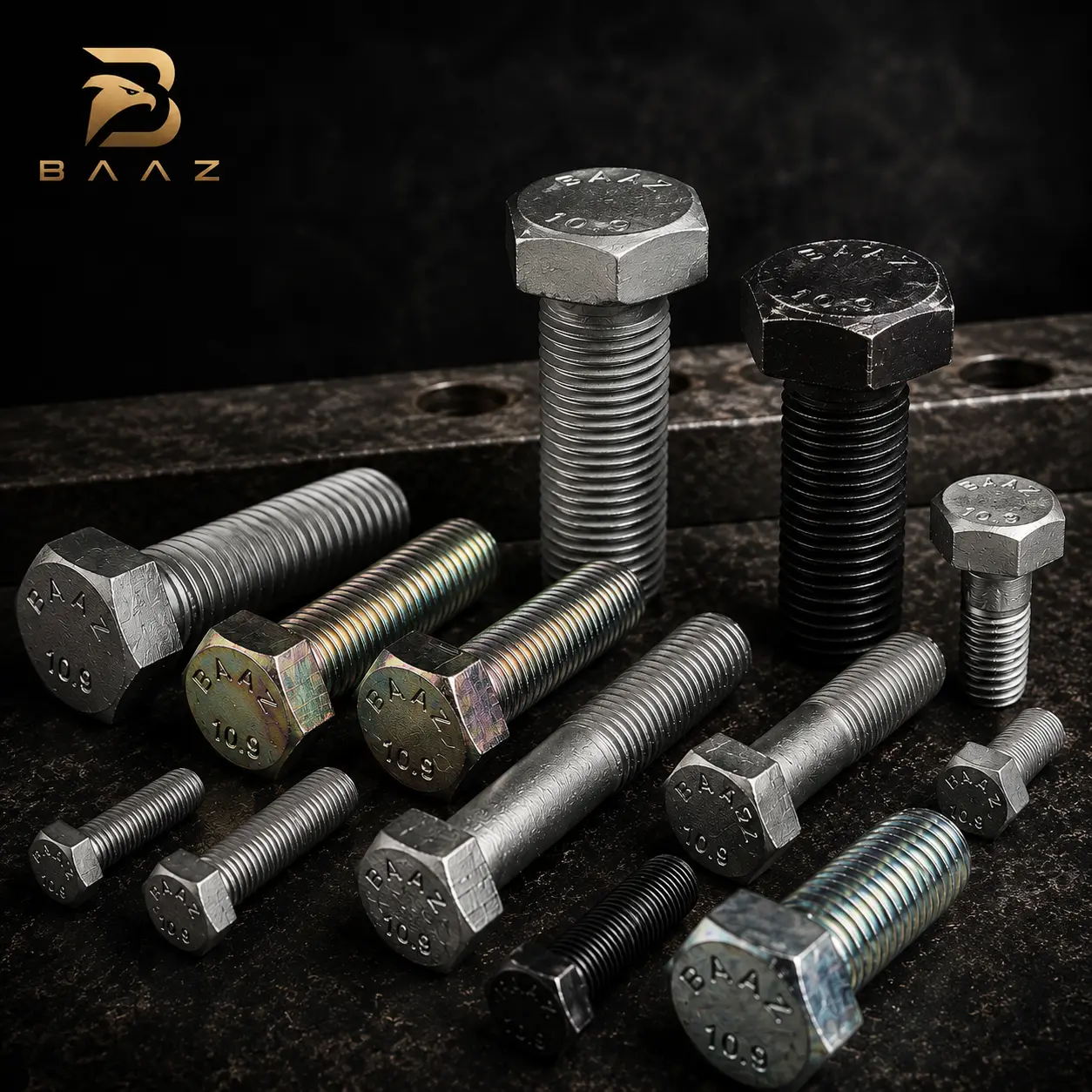
As a HSFG Bolts Manufacturer, Baaz Fasteners produces to all three, in Grade 8.8 and 10.9, giving fabricators and procurement teams a consistent, standards-compliant option regardless of which specification a project calls for.
Frequently Asked Questions
Can HSFG bolts be reused after removal? Generally, no. Once an HSFG bolt has been tensioned to its specified preload, it shouldn’t be reused in another slip-critical connection, since the controlled tension that gives it its performance can’t be reliably re-verified after removal.
Are HSFG bolts more expensive than regular bolts? Yes, typically — both the material grade and the controlled tensioning process add cost compared to a standard bolt. That cost is offset by the reduced maintenance, longer fatigue life, and structural reliability HSFG bolts provide in the applications they’re actually designed for.
What grades do HSFG bolts come in? The most common grades are 8.8 and 10.9, with 10.9 used more frequently in high-load structural applications.
Do HSFG bolts need washers? Yes — hardened washers are typically used to evenly distribute the clamping force and protect the bolt head and nut bearing surfaces during tensioning.
H2: Sourcing HSFG Bolts for Your Next Project
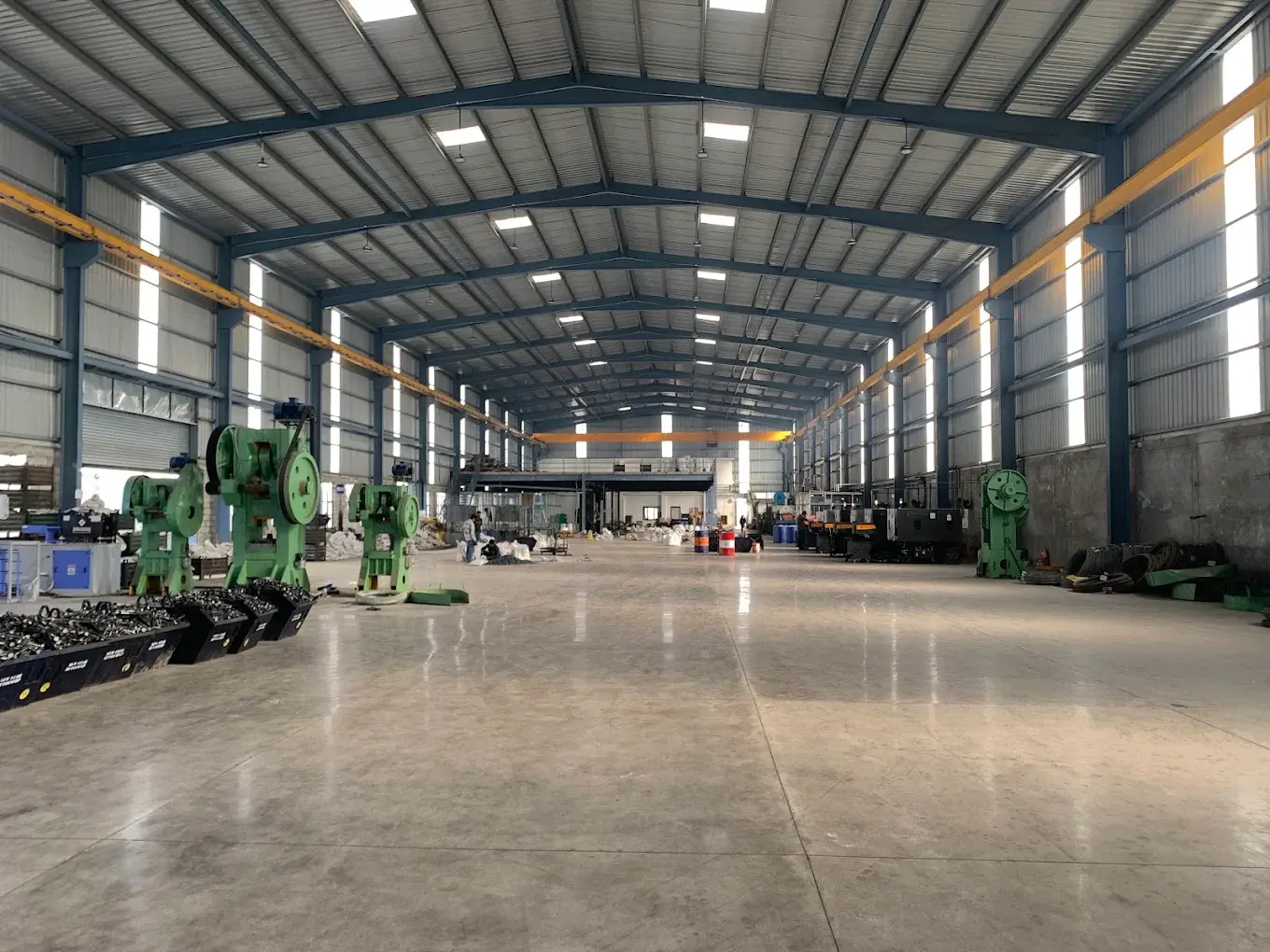
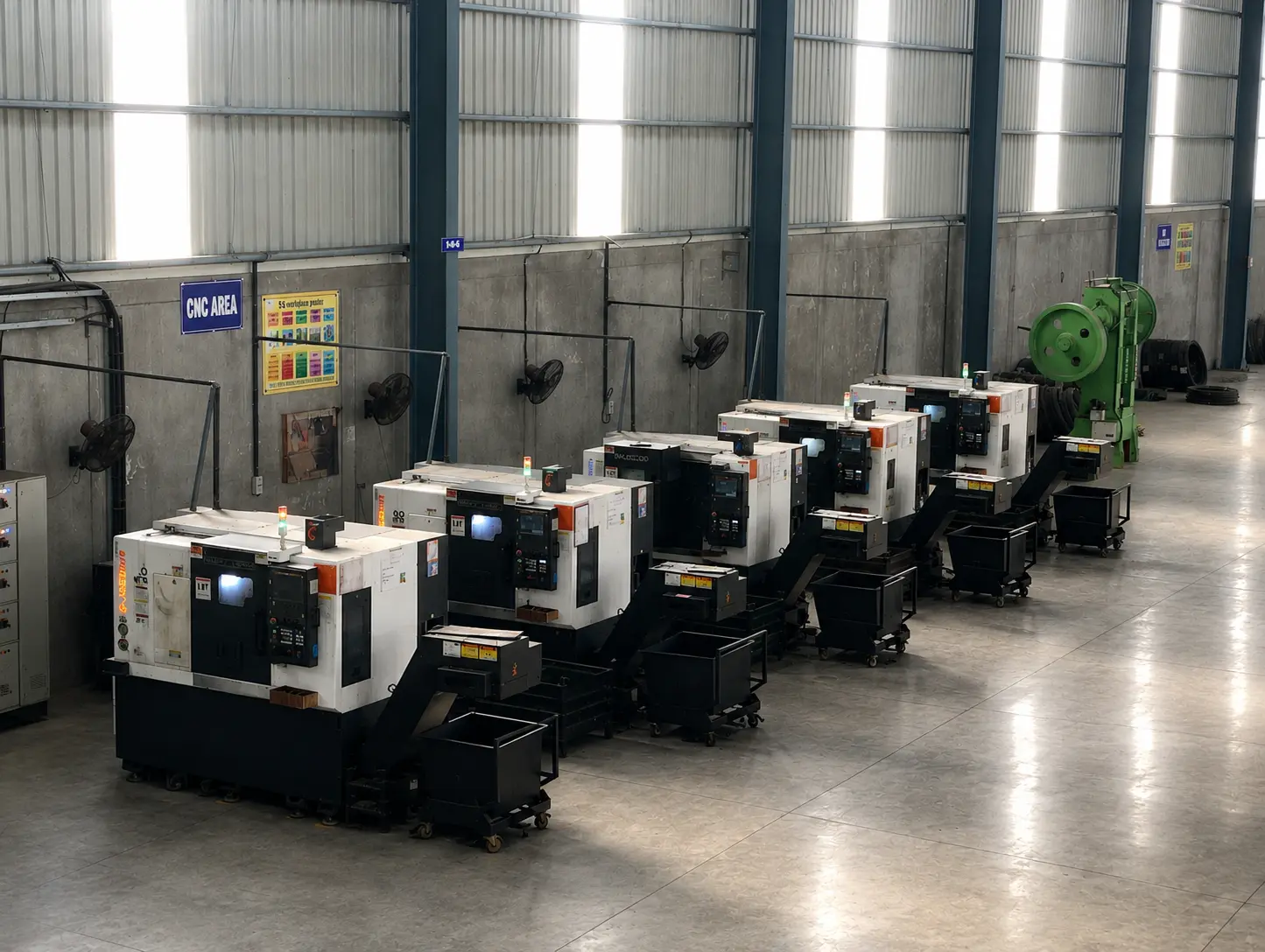
Whether you’re specifying fasteners for a bridge deck, a PEB structure, or a high-rise steel frame, the difference between an HSFG bolt and a regular bolt isn’t academic — it’s the difference between a joint that holds and a joint that eventually slips. As a HSFG Bolts Manufacturer based in Ludhiana, Punjab, Baaz Fasteners produces HSFG bolts to IS 3757, EN 14399, and ASTM A325 standards, backed by in-house testing and over 60 years of fastener manufacturing experience.