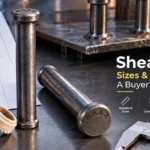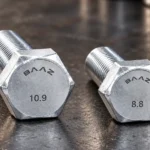

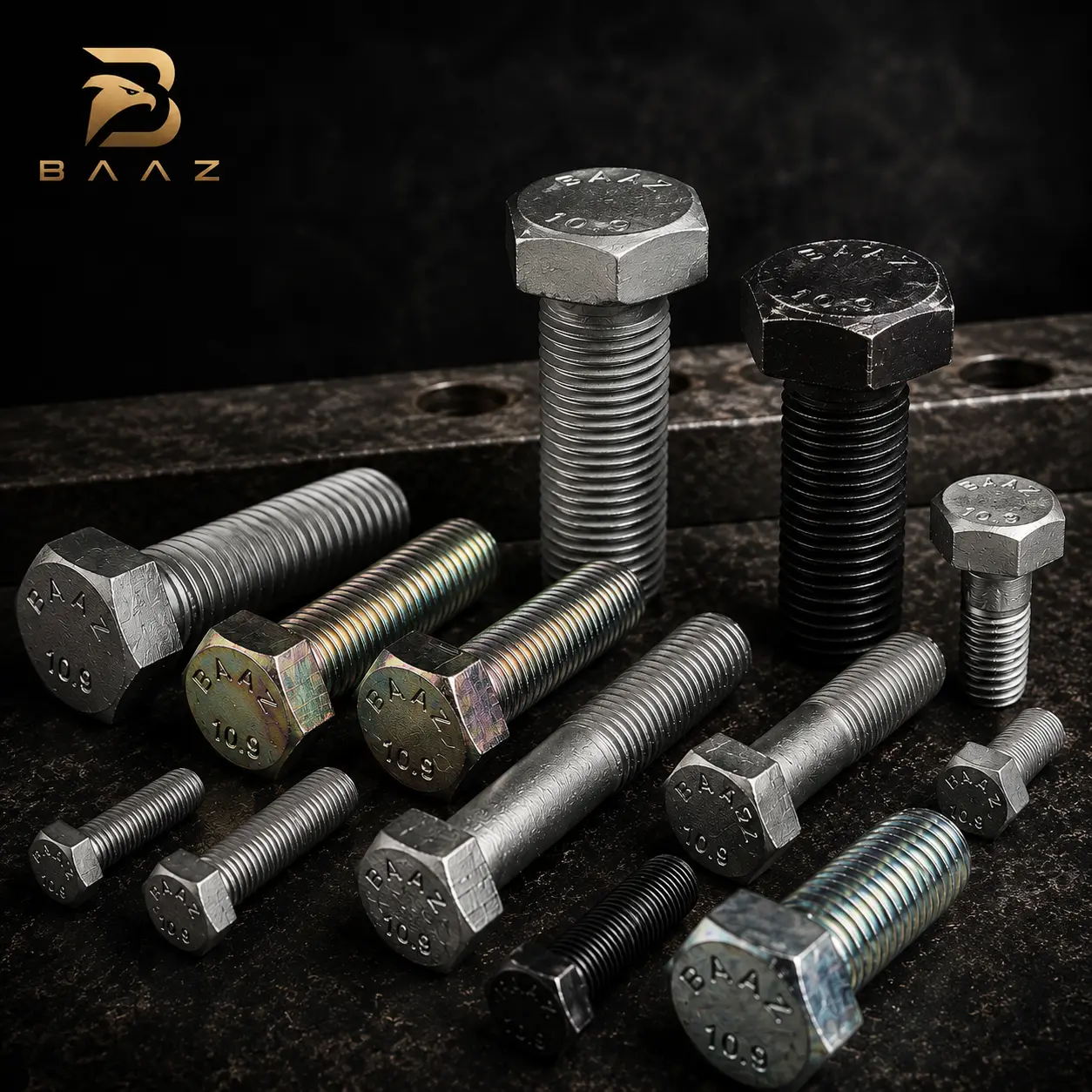
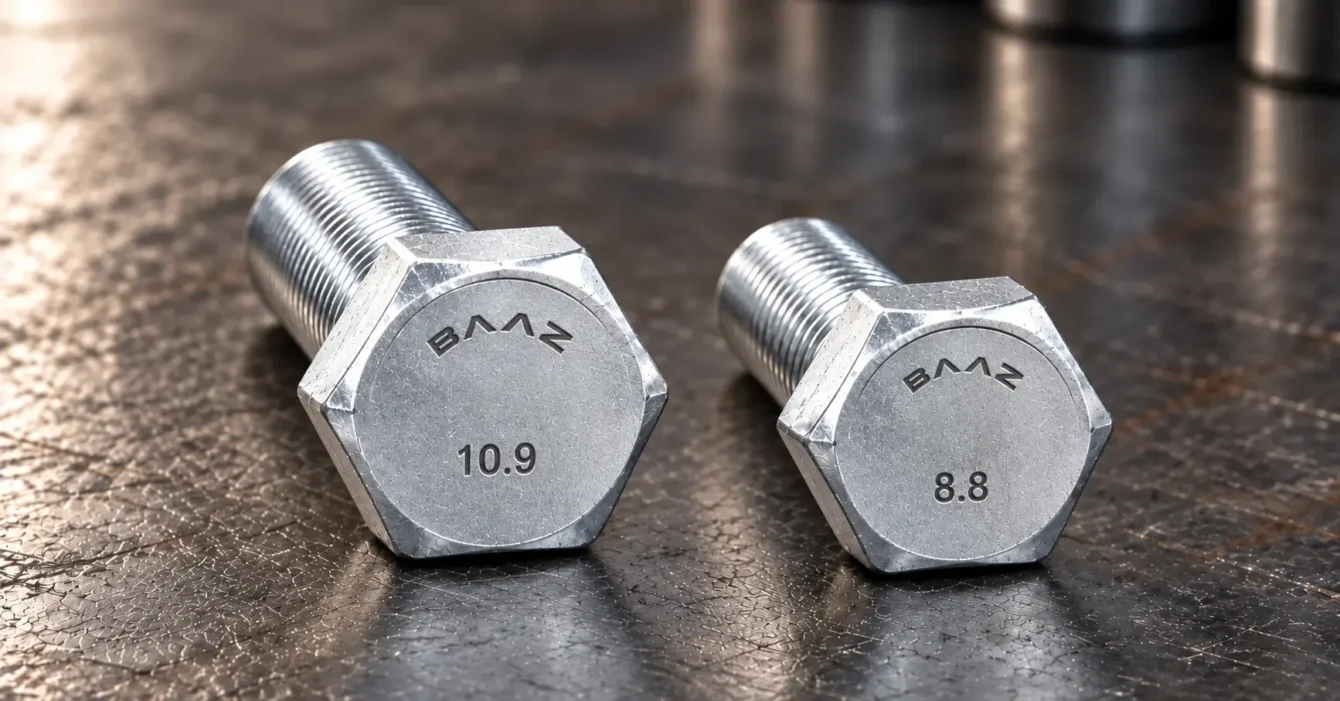
Bolt grades, also called strength classes, indicate a fastener’s tensile and yield strength. Metric grades (e.g., 8.8, 10.9) are marked as two numbers on the bolt head — the first indicates tensile strength in MPa, the second the yield-to-tensile ratio. SAE grades (Grade 2, 5, 8) use radial head markings instead. Structural applications typically require grade 8.8 or 10.9, while lighter fabrication work can use grade 4.6 or 4.8.
If you have ever picked up a bolt and seen numbers like “8.8” or “10.9” stamped on the head, you have already met a bolt grade. That small marking tells you almost everything an engineer or fabricator needs to know about a fastener’s strength, and getting it wrong can mean the difference between a joint that lasts decades and one that fails under load.
At Baaz Fasteners, we manufacture and supply fasteners across dozens of industries, and “what bolt grade should I use?” is one of the questions our team hears most often. This guide breaks down bolt grades in plain language so you can choose the right strength class with confidence, whether you’re specifying fasteners for a bridge, a machine frame, or a general fabrication job.
What Is a Bolt Grade?
A bolt grade (also called a strength class or property class) is a standardized rating that tells you the mechanical properties of a bolt — primarily its tensile strength and yield strength. It is not a description of the bolt’s size, shape, or coating; it’s purely about how much load the fastener’s material can handle before it stretches permanently or breaks.
Bolt grades exist so that engineers, fabricators, and buyers anywhere in the world can specify a fastener and know exactly what strength they’re getting, regardless of who manufactured it. This is what makes bolts interchangeable across suppliers and countries, as long as the grading system is followed correctly.
Metric Bolt Grades: Reading the Numbers
Most bolts used outside North America follow the metric property class system defined by ISO 898-1. The marking on the bolt head usually looks like two numbers separated by a dot — for example, 8.8 or 10.9. Here’s how to decode it:
- First number × 100 = the bolt’s minimum tensile strength in megapascals (MPa)
- Second number ÷ 10 = the ratio of yield strength to tensile strength
So a grade 8.8 bolt has a minimum tensile strength of 800 MPa, and its yield strength is 80% of that (640 MPa). A grade 10.9 bolt has a tensile strength of 1000 MPa, with a yield strength of 90% of that (900 MPa).
Common Metric Bolt Grades and Their Uses
| Grade | Tensile Strength | Typical Use Case |
|---|---|---|
| 4.6 | 400 MPa | Light-duty fabrication, non-structural fittings |
| 4.8 | 400 MPa | General purpose, low-load assemblies |
| 5.6 | 500 MPa | Machinery, general engineering |
| 8.8 | 800 MPa | Structural steel, automotive, general construction |
| 10.9 | 1000 MPa | High-load structural connections, heavy machinery |
| 12.9 | 1200 MPa | Precision engineering, high-performance automotive |
For structural steelwork specifically, grade 8.8 and grade 10.9 are the industry standard, and 10.9 bolts are the ones most commonly torqued to a controlled preload in High Strength Friction Grip (HSFG) connections used in bridges, high-rises, and seismic-resistant structures.
Imperial (SAE) Bolt Grades: The US System
If you’re sourcing fasteners for equipment built to US or Canadian standards, you’ll encounter the SAE grading system instead. Rather than a decimal marking, SAE grades are identified by the number of raised radial lines on the bolt head:
- Grade 2 — No markings. Low-carbon steel, general purpose, lower strength.
- Grade 5 — Three radial lines. Medium-carbon steel, heat-treated, common in automotive and general engineering.
- Grade 8 — Six radial lines. High-strength alloy steel, used where maximum load capacity is required.
As a rough comparison, SAE Grade 5 is broadly similar in strength to metric grade 8.8, and SAE Grade 8 is comparable to metric grade 10.9 — though the two systems are not perfectly interchangeable, so always match the specification called for in your engineering drawing.
How to Choose the Right Strength Class
Picking a bolt grade isn’t about defaulting to the strongest option available. Over-specifying strength adds cost and can even introduce brittleness in the wrong application. Here’s how to think through it:
- Check the design load. Structural engineers calculate the load a connection must bear; the bolt grade should meet or exceed this with an appropriate safety margin.
- Consider the joint type. Slip-critical connections (like HSFG joints) require a controlled preload and are typically specified in grade 8.8 or 10.9. Snug-tight, non-critical connections can often use lower grades.
- Factor in the environment. Vibration, cyclic loading, and fatigue resistance often call for higher-grade bolts even when static load alone wouldn’t require it.
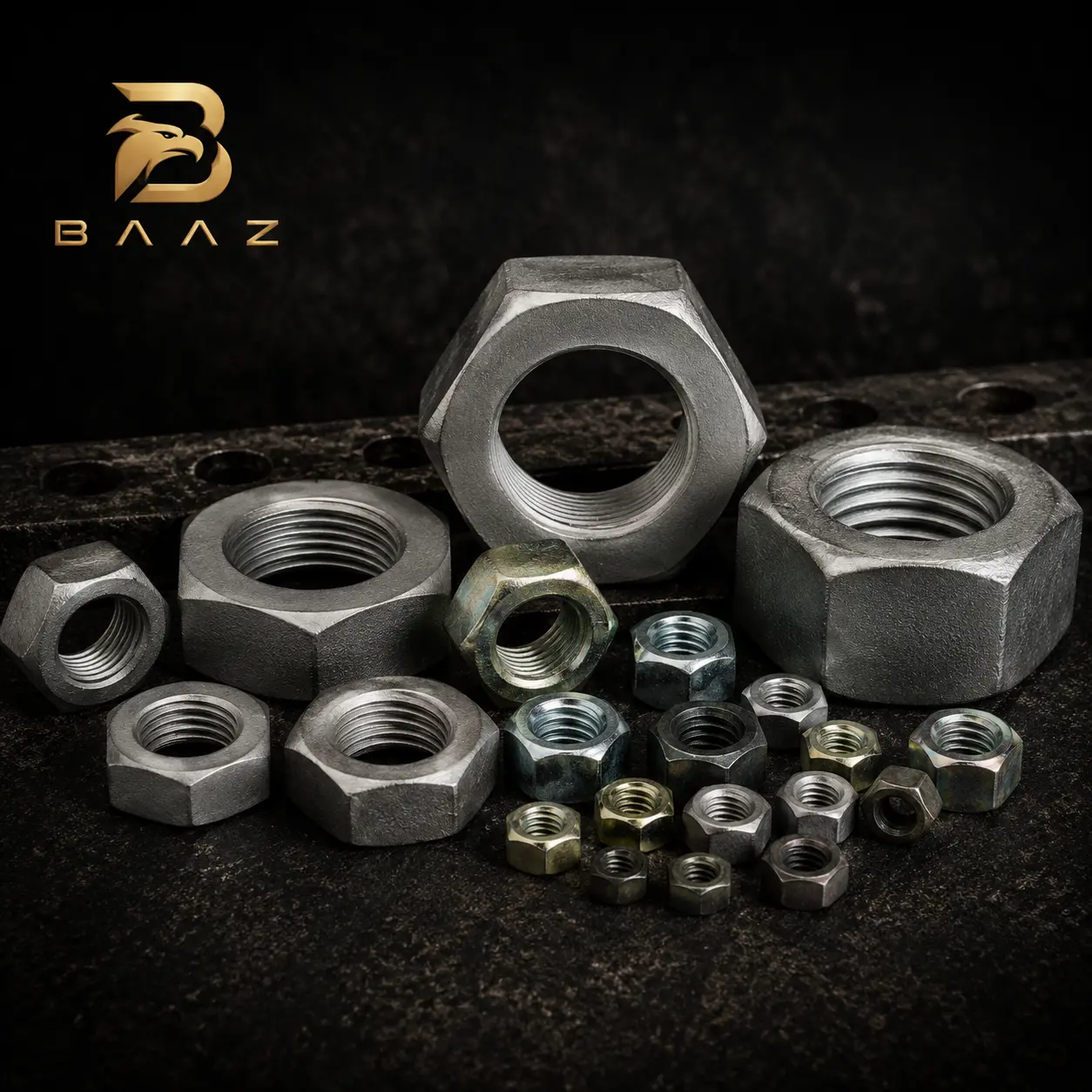
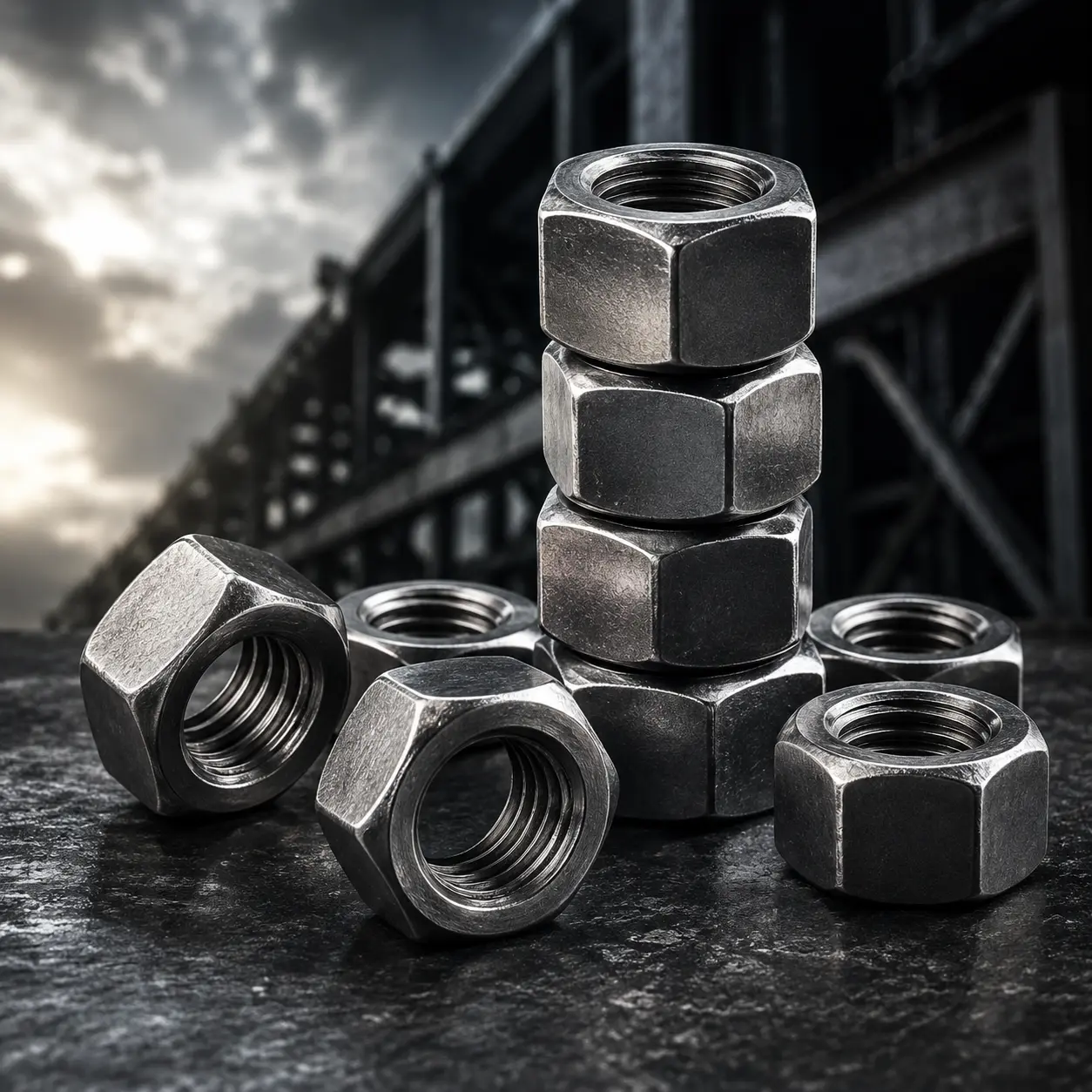
- Match the nut and washer grade. A high-grade bolt paired with a low-grade nut creates a weak point in the assembly — grades should be compatible across the whole fastener set.
- Follow the applicable code. Structural work in India typically references IS 1367 or IS 3757 for high-tensile fasteners; always check the governing standard for your project.
Why Bolt Grade Matters More Than People Think
Choosing the wrong bolt grade is one of the most common — and most preventable — causes of fastener failure. A bolt that’s too weak for the application can yield, stretch, or shear under load. A bolt that’s stronger than necessary isn’t usually dangerous, but it does waste money and, in some cases, adds unnecessary weight or reduces ductility where some give in the joint is actually desirable.
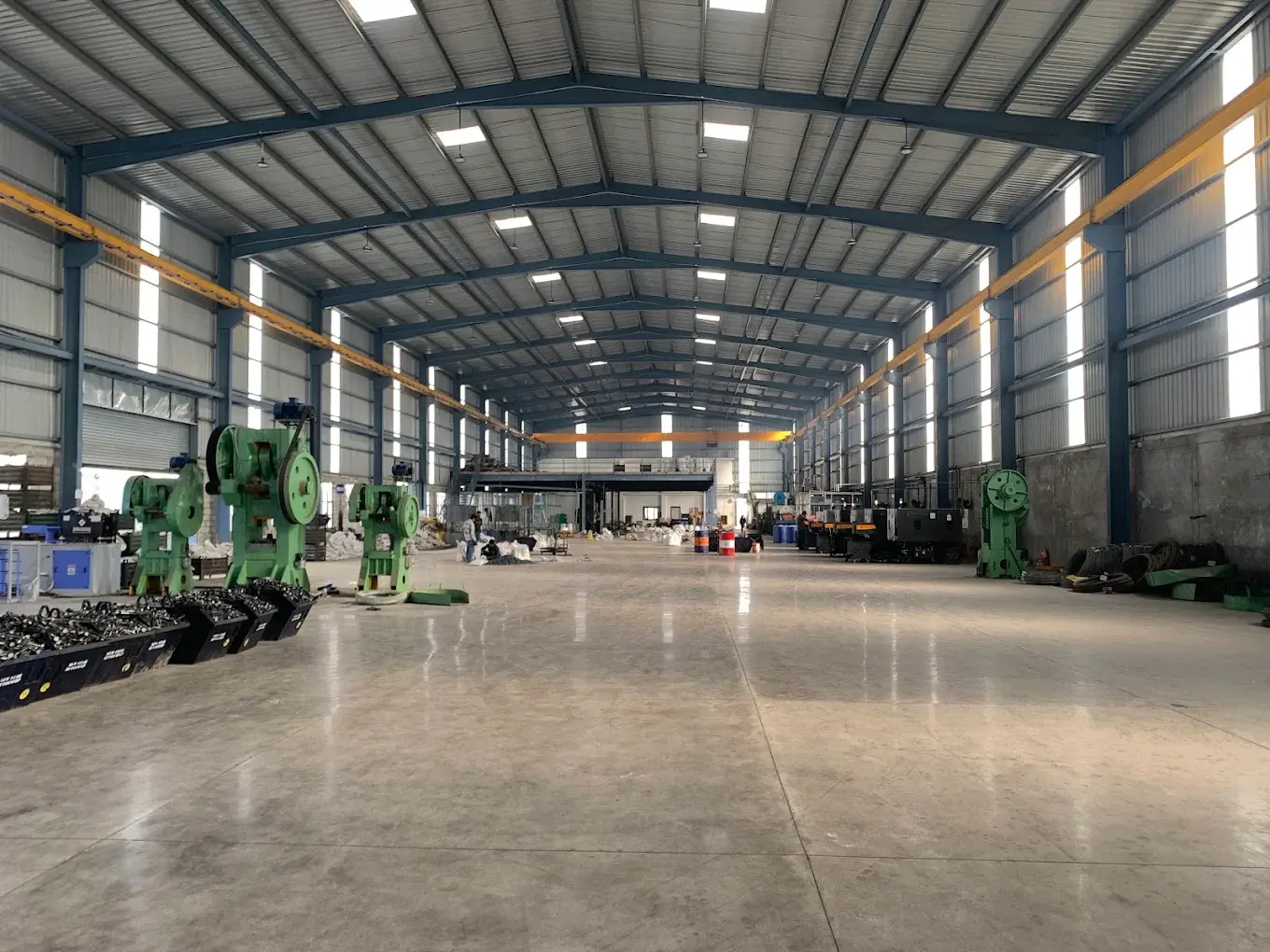
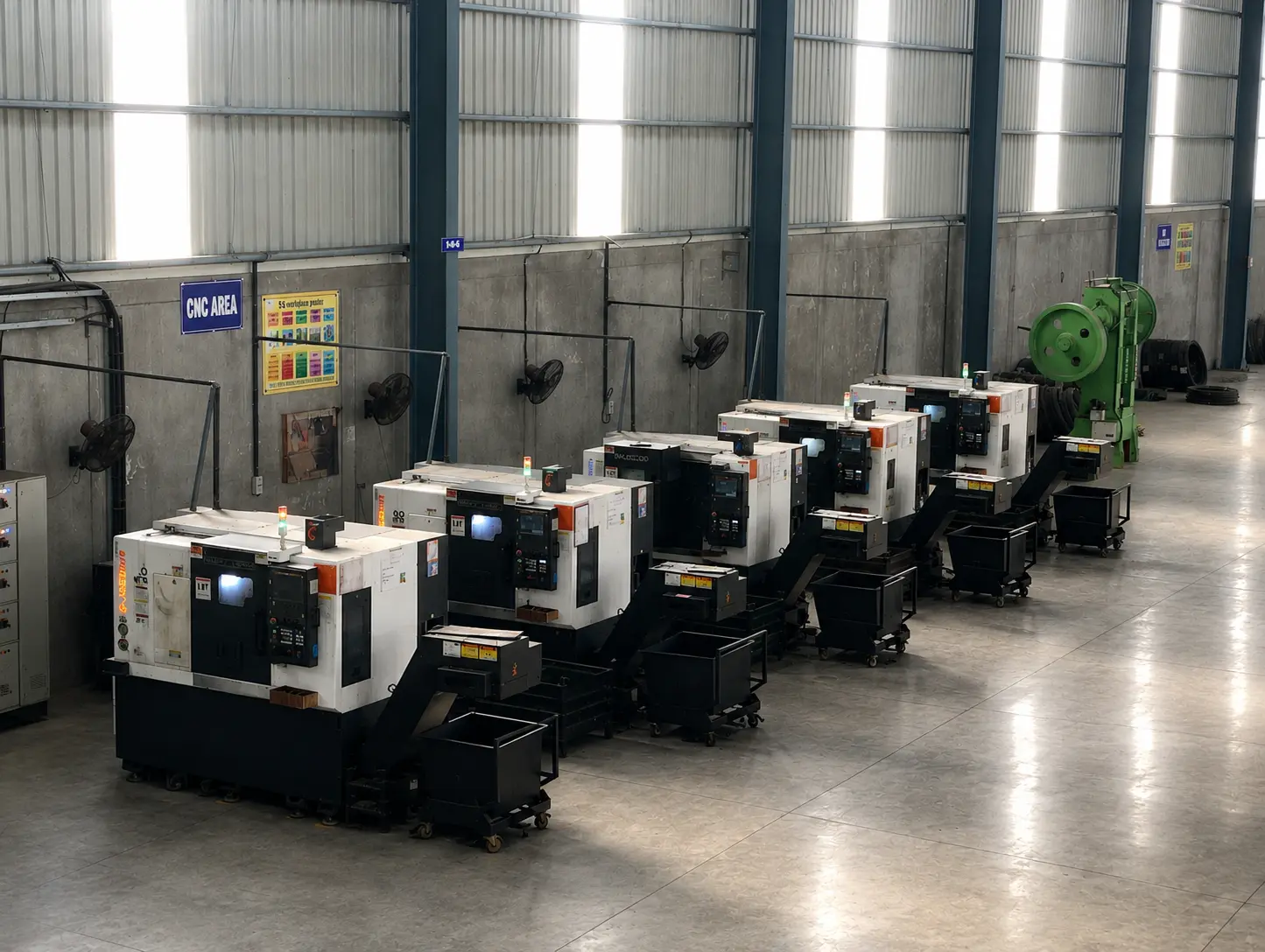
This is why sourcing from a manufacturer that tests and certifies every batch matters. At Baaz Fasteners, every fastener we produce — including our full range of hex bolts — is manufactured to verified property class standards, so what’s stamped on the head is exactly what you get in service.
Baaz Fasteners: Your Trusted Hex Bolts Manufacturer
Whether you need grade 4.6 bolts for a light fabrication job or grade 10.9 bolts for a slip-critical structural connection, Baaz Fasteners is a reliable hex bolts manufacturer supplying accurately graded, quality-tested fasteners across construction, infrastructure, and industrial manufacturing sectors. Our production process includes material testing, controlled heat treatment, and batch certification, so every bolt we ship meets its stated strength class.
If you’re unsure which grade fits your project, our team can help you match the right fastener to your load requirements and applicable code.
Frequently Asked Questions
What does “8.8” mean on a bolt? It means the bolt has a minimum tensile strength of 800 MPa, with a yield strength that is 80% of that value (640 MPa).
Is grade 10.9 stronger than grade 8.8? Yes. Grade 10.9 has a tensile strength of 1000 MPa compared to 800 MPa for grade 8.8, making it suitable for higher-load structural applications.
Can I mix bolt grades in the same joint? It’s not recommended. Mixing grades can create uneven load distribution and weak points; nuts, washers, and bolts should be matched to compatible grades.
What’s the difference between metric and SAE bolt grades? Metric grades use a decimal marking (like 8.8) based on ISO 898-1, while SAE grades use radial line markings (like Grade 5 or Grade 8) based on US standards. The systems use different testing methods, so match your specification to the standard your project follows.
Where can I buy certified high-tensile bolts? Baaz Fasteners manufactures and supplies certified fasteners across all common grades — reach out to our team with your application details for a recommendation.