
Quick Summary
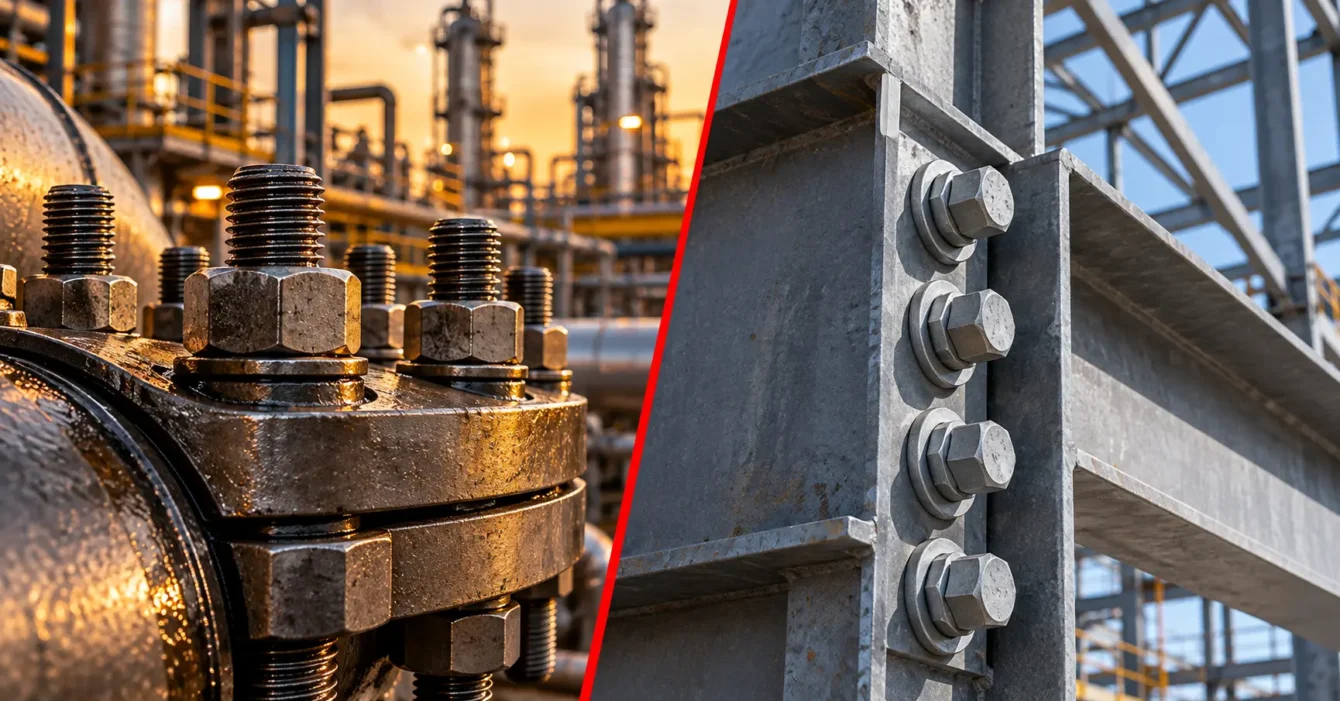
ASTM A193 Grade B7 and EN 14399 are not competing alternatives — they solve different bolting problems. B7 is a material specification for chromium-molybdenum alloy steel studs used in high-temperature, high-pressure flange connections on piping, valves, and pressure vessels — standard equipment in oil and gas and petrochemical plants. EN 14399 is an assembly specification covering preloaded bolt, nut, and washer sets used in structural steel connections, such as pipe racks, support steelwork, and platform structures. Most large oil and gas EPC projects need B7 studs for process piping and EN 14399 (or an equivalent structural standard) for the surrounding steelwork — not one standard instead of the other.
Why This Question Keeps Coming Up
On a typical oil and gas or petrochemical project, procurement teams end up sourcing two very different categories of fasteners under two very different-sounding standards — and it’s easy to assume one must be a regional equivalent of the other. It isn’t. ASTM A193 Grade B7 and EN 14399 rarely compete for the same bolt hole on a project; they cover different parts of the same facility.
Understanding the distinction matters because specifying the wrong standard doesn’t just cause a paperwork mismatch — it can mean the wrong steel chemistry going into a high-pressure flange, or a structural connection that was never tested as a complete preloaded assembly. This guide breaks down what each standard actually governs, and how to tell which one your project needs.
What Is ASTM A193 Grade B7?
ASTM A193 Grade B7 is a material specification published by ASTM International, covering alloy steel bolting material intended for high-temperature and high-pressure service — the kind of duty found in flanged pipe connections, valves, and pressure vessels across refineries, gas processing plants, and power generation facilities.
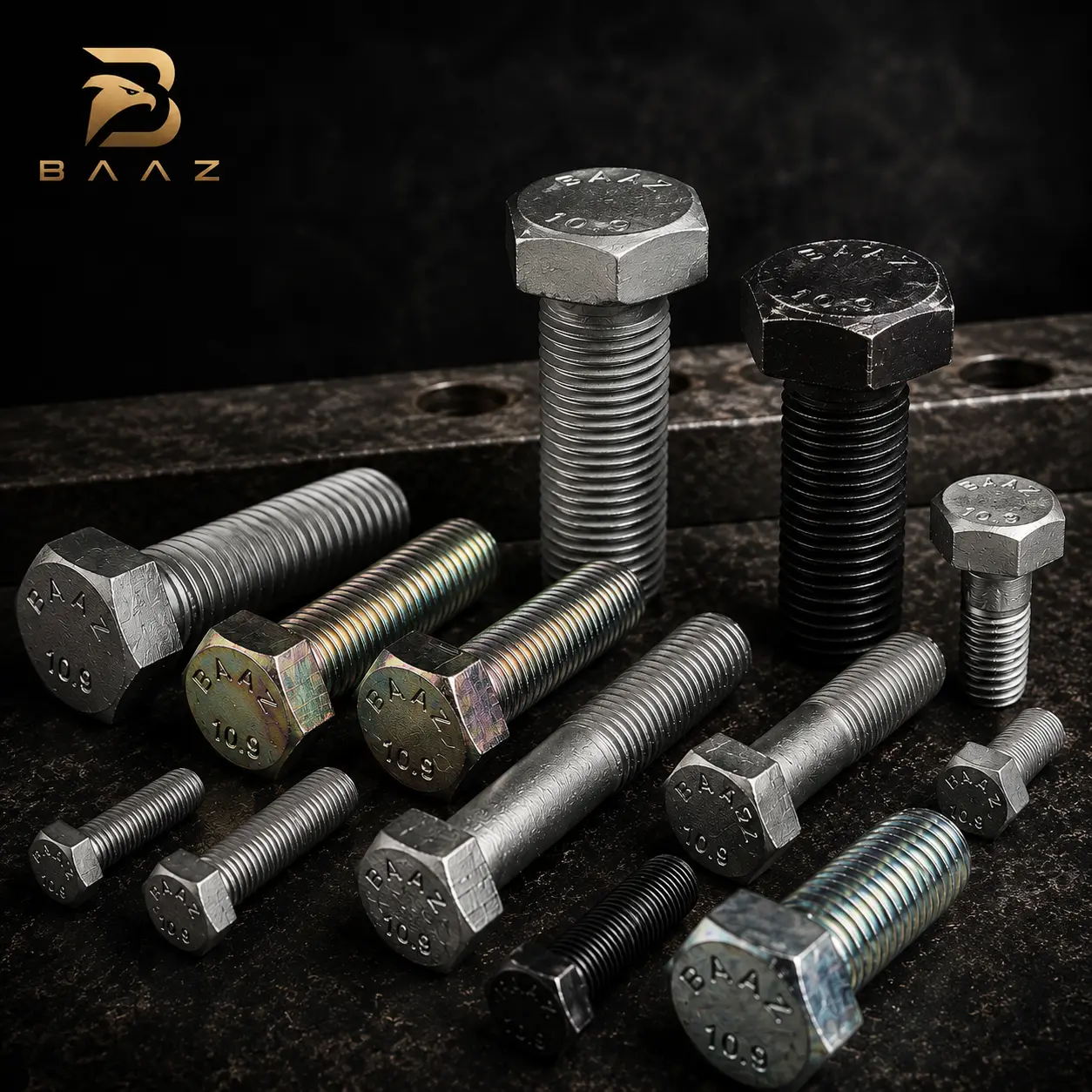
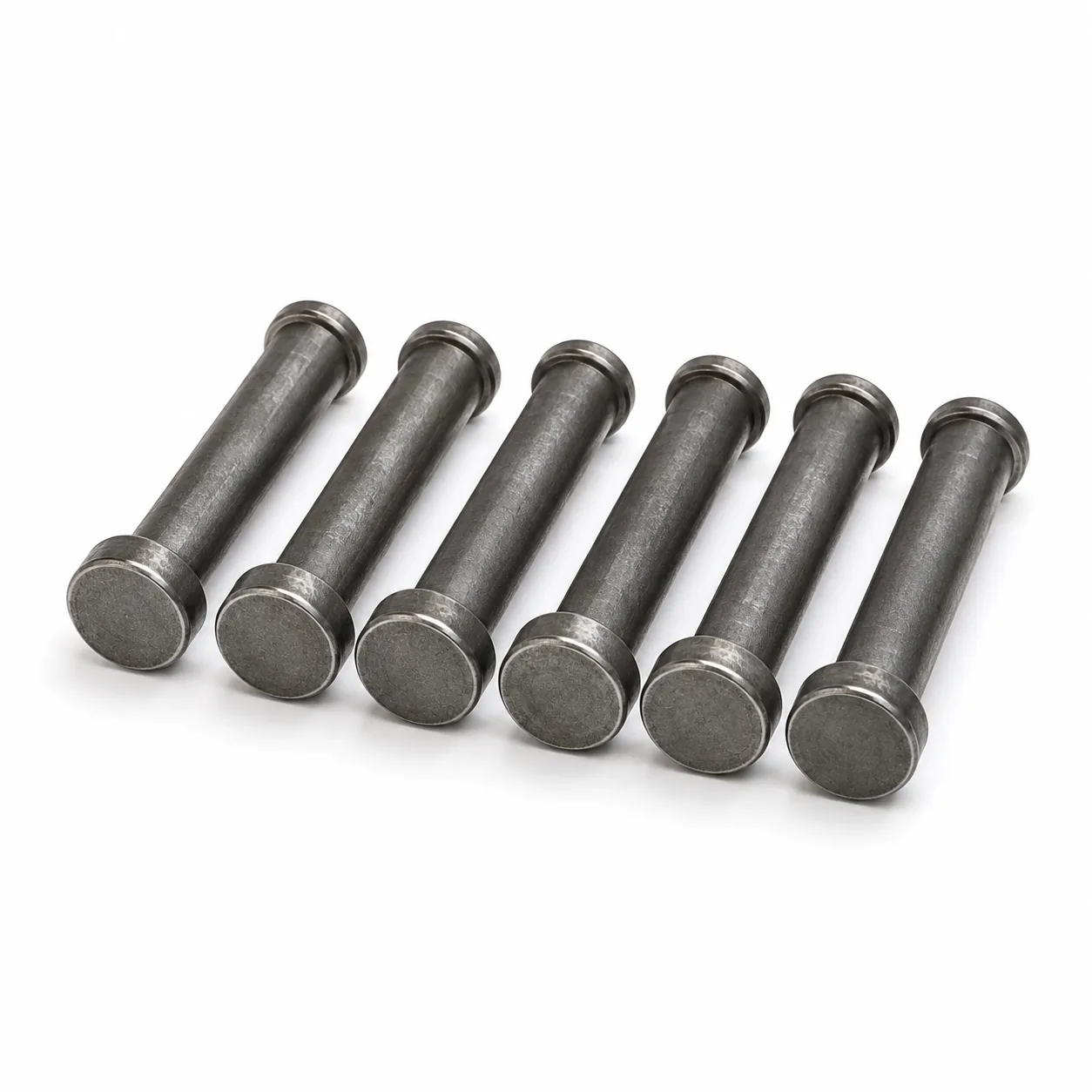
B7 studs are manufactured from AISI 4140 or 4142 chromium-molybdenum alloy steel, hot-formed and then quenched and tempered to develop a controlled combination of strength and toughness. The minimum tempering temperature is typically 593°C (1,100°F).
Chemical Composition (Typical)
- Carbon: 0.38 – 0.48%
- Manganese: 0.75 – 1.00%
- Chromium: 0.80 – 1.10%
- Molybdenum: 0.15 – 0.25%
- Phosphorus: 0.035% max, Sulfur: 0.040% max
Mechanical Properties (Diameters up to 2½″ / 64 mm)
- Tensile strength: 125 ksi (860 MPa) minimum
- Yield strength: 105 ksi (725 MPa) minimum
- Elongation: 16% minimum
- Hardness: 35 HRC maximum (321 HBW)
B7 studs are almost always paired with ASTM A194 Grade 2H heavy hex nuts, and the assembly is used with ASME B16.5 / B16.47 pipe flanges rather than a structural steel connection. For sour service environments governed by NACE MR0175, a modified grade — B7M — is specified, with hardness capped at 22 HRC. A low-temperature variant, ASTM A320 Grade L7, shares the same chemistry as B7 but adds Charpy impact testing down to -101°C (-150°F) for cryogenic and cold-climate service.
What Is EN 14399?
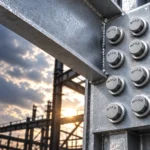
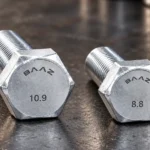
EN 14399 is a European assembly specification — it doesn’t just define a material, it defines a complete preloaded bolting system consisting of a matched bolt, nut, and hardened washer, all supplied and tested together by the same manufacturer. It covers grade 8.8 and 10.9 structural bolts across the HR (EN 14399-3) and HV (EN 14399-4) systems, used for high-strength, slip-resistant connections in steel structures.
Unlike B7, which governs a single fastener’s material chemistry, EN 14399 requires the whole assembly to be tested for its ability to reach a specified minimum preload (Fp,C) — the basis of friction-grip structural connections used in bridges, buildings, and heavy steelwork.
The Real Difference: Material Spec vs Assembly System
This is the distinction that resolves most of the confusion: B7 certifies the steel, while EN 14399 certifies the assembly’s behaviour under load. A B7 stud is qualified by its chemistry, heat treatment, and tensile/yield properties as an individual component. An EN 14399 assembly is qualified by how the bolt, nut, and washer perform together once tightened to a controlled preload — the washer hardness, nut proof load, and bolt strength are all engineered to work as one system.
They also come from entirely different design traditions: B7 sits inside the ASME/API framework used for pressure equipment and piping, while EN 14399 sits inside the Eurocode framework (BS EN 1993 / EN 1994) used for structural steelwork design. Neither standard was written with the other’s application in mind, which is exactly why treating them as interchangeable creates problems.
Side-by-Side Comparison
ASTM A193 Grade B7 vs EN 14399
| Aspect | ASTM A193 Grade B7 | EN 14399 (HR/HV) |
|---|---|---|
| Type of Standard | Material specification for the stud itself | Assembly specification for bolt + nut + washer |
| Governing Body | ASTM International (USA) | European Committee for Standardization (CEN) |
| Primary Use | Flange bolting on piping, valves, pressure vessels | Preloaded structural steel connections |
| Typical Industries | Oil & gas, petrochemical, power generation | Construction, bridges, industrial steel structures |
| Base Material | AISI 4140/4142 chromium-molybdenum alloy steel | Carbon/alloy steel, property class 8.8 or 10.9 |
| Tensile Strength | 125 ksi (860 MPa) minimum, up to 2½″ | 800–1000 MPa, depending on grade |
| Matching Nut | ASTM A194 Grade 2H | Matched nut supplied within the same tested assembly |
| Key Variants | B7M (sour service, NACE MR0175), L7 (low temperature) | HR (EN 14399-3), HV (EN 14399-4) |
Where Each Standard Actually Applies
ASTM A193 B7 — Choose it for:Flange-to-flange piping connections, valve bonnet bolting, pressure vessel closures, and any high-temperature/high-pressure joint built to ASME B16.5 or B16.47 flange standards.
ASTM A193 B7 — Choose it for:Flange-to-flange piping connections, valve bonnet bolting, pressure vessel closures, and any high-temperature/high-pressure joint built to ASME B16.5 or B16.47 flange standards.
Can One Project Need Both?
Yes — and on large EPC oil and gas projects, this is the norm rather than the exception. A single refinery or gas processing unit will typically need B7 studs for thousands of flange joints across its piping and equipment, while the structural steelwork supporting that piping — pipe racks, pipe bridges, equipment platforms — is frequently designed to Eurocode and specified under EN 14399, particularly on projects with a European design basis or European EPC contractor.
The two standards aren’t in competition on these projects; they’re simply assigned to different scopes of work within the same facility. Confirming which scope you’re procuring for — process piping/equipment versus structural steel — usually settles the question immediately.
How to Decide Which One You Need
- Is the bolt joining two pipe flanges, a valve, or a pressure vessel?You almost certainly need B7 studs (or B7M/L7 depending on service conditions), paired with A194 Grade 2H nuts.
- Is the bolt connecting structural steel members — beams, columns, bracing, platforms?EN 14399 (or the equivalent structural standard specified in your project’s design basis) is the correct route.
- Is the service sour (H₂S-containing) or cryogenic?For B7-type applications, confirm whether B7M (NACE sour service) or L7 (low-temperature) is required instead of standard B7.
- Does the project design basis reference Eurocode or ASME/API?This single detail on the project specification sheet typically resolves which family of standards governs each part of the job.
Common Mistakes to Avoid
- Assuming B7 and EN 14399 are interchangeable “high-strength” options rather than standards built for different joint types.
- Ordering standard B7 for sour or wet H₂S service, where B7M’s stricter hardness limit is required to avoid sulfide stress cracking.
- Sourcing an EN 14399 bolt, nut, and washer from different manufacturers — the standard requires the full assembly to be tested together, not mixed and matched.
- Overlooking temperature limits on B7 studs at the upper end of process conditions, where a higher-alloy grade may be required instead.
- Failing to request mill test certificates (EN 10204 Type 3.1) alongside the material or assembly certification for traceability.
ASTM A193 Grade B7 and EN 14399 were never designed to compete with each other — one certifies a high-strength alloy steel stud for pressure-retaining flange connections, the other certifies a complete preloaded bolting system for structural steel joints. The “right” standard depends entirely on what you’re bolting: process piping and equipment point to B7 (or its B7M/L7 variants), while structural steelwork points to EN 14399.
For procurement teams working across a mixed-scope oil and gas project, the safest approach is to map each bolting requirement back to its design basis — ASME/API for piping and pressure equipment, Eurocode for structural steel — rather than trying to standardise on a single specification across the whole job.